The best type of fence in Walnut Grove, WA is usually one that matches the home, provides useful privacy or security, requires reasonable maintenance, and is professionally installed. Wood, vinyl, aluminum, and other materials can add appeal, but the value depends on the property, buyer expectations, condition, and quality of installation.

A new fence is more than a boundary around a yard. It can improve privacy, define outdoor areas, create a safer space for children and pets, protect a garden, improve curb appeal, and make a property feel more complete.
However, homeowners should be careful with the idea that one fence material automatically adds the most dollars to a home’s resale price. There is no universal rule saying that a wood, vinyl, aluminum, or chain-link fence will always produce the highest return.
The National Association of REALTORS® reports that 97% of its members consider curb appeal important in attracting a buyer, while 98% say curb appeal is important to potential buyers. The same NAR outdoor remodeling research also notes that actual cost recovery varies according to factors such as project design, material quality, location, property condition, and homeowner preferences.
That means the practical question is not simply, “Which fence is most expensive?”
A better question is:
Which fence gives this particular home the combination of appearance, function, durability, privacy, and low maintenance that future buyers are likely to appreciate?
For homeowners considering Fence Installation Services in Walnut Grove, that distinction matters.
A well-designed fence can become a useful part of the property. A poorly selected fence can do the opposite if it looks out of place, creates maintenance problems, blocks desirable views, or does not meet applicable local requirements.
This guide explains the main fence materials, their advantages and limitations, how they can affect home appeal, and what homeowners should consider before choosing the best type of fence in Walnut Grove, WA.
Why can a fence add value to a home?
A fence can add practical and visual value when it solves a real property need without creating excessive maintenance or visual problems.
A buyer may see value in a fence because it can provide:
- Privacy from nearby properties
- A defined backyard
- A safe area for children
- A contained space for pets
- Protection for gardens
- Better separation between outdoor areas
- Improved curb appeal
- Security around certain parts of the property
- A finished appearance around the yard
- Better organization of outdoor space
The value is therefore partly functional.
For example, a family with a dog may place significant value on a secure backyard fence. A homeowner who enjoys gardening may prefer a smaller garden enclosure. A property next to a busy road may benefit from a privacy-oriented design. A home with an attractive landscape may look better with a decorative fence that complements the architecture.
This is why the best type of fence in Walnut Grove, WA should be selected according to the property’s actual needs rather than a general trend.
How important is curb appeal when selling a home?
Curb appeal can strongly influence how potential buyers perceive a property, although curb appeal should not be confused with a guaranteed increase in appraised value.
NAR research found that 92% of REALTORS® have suggested sellers improve curb appeal before listing a home, and 97% consider curb appeal important when attracting buyers.
A fence can contribute to that first impression when it is:
- Straight and properly aligned
- Free from major damage
- Appropriate for the home’s design
- Properly maintained
- Professionally installed
- Consistent with the surrounding landscape
- Free from obvious rust, rot, leaning posts, or broken gates
A fence that is old, damaged, leaning, or heavily stained can create a different impression.
In other words, fence condition may matter as much as fence material.
A high-cost material with poor installation may look less appealing than a moderately priced material that is clean, straight, well-designed, and properly maintained.
What is the best type of fence in Walnut Grove, WA?
The best type of fence in Walnut Grove, WA depends on the homeowner’s goals, but wood, vinyl, aluminum, and chain-link are among the major options worth comparing.
There is no single material that wins every category.
Here is a practical comparison:
| Fence Type | Main Benefit | Privacy | Maintenance | Appearance | Typical Best Use |
| Wood | Natural appearance and flexibility | High with solid design | Moderate to high | High | Privacy, yards, traditional homes |
| Vinyl | Low-maintenance privacy | High | Low | Clean and uniform | Privacy and easy maintenance |
| Aluminum | Decorative and durable | Low to moderate | Low | High | Front yards, decorative boundaries |
| Chain Link | Practical and economical | Low unless screened | Low | Functional | Pets, utility areas, security |
| Horizontal Wood | Modern appearance | High | Moderate to high | High | Contemporary homes |
| Decorative Metal | Elegant appearance | Low | Low to moderate | High | Front yards and landscaping |
This table is a decision guide, not a resale-value ranking. Actual costs, lifespan, and buyer preferences can vary considerably by product quality, installation, property conditions, and location.
Why is wood often considered a strong residential fencing choice?
Wood remains popular because it offers flexibility in design, privacy, height, color, and configuration.
A wood fence can be designed as:
- A traditional picket fence
- A privacy fence
- A board-on-board fence
- A horizontal fence
- A post-and-rail fence
- A garden fence
- A decorative combination fence
Wood can also be stained or painted to complement a home’s exterior.
For homeowners who want a natural appearance, wood can be a particularly useful option.
However, wood also requires more attention than many synthetic or metal alternatives. Moisture, poor drainage, ground contact, and insufficient protection can contribute to deterioration.
The U.S. Forest Service recommends appropriate preservative treatment for wood used in conditions where decay is a concern and specifically notes that fence posts intended for ground contact should receive suitable pressure treatment.
That makes installation details extremely important.
A wood fence should not simply be judged by the appearance of the boards on the day it is installed.
Homeowners should also consider:
- Post treatment
- Ground contact
- Drainage
- Board spacing
- Fasteners
- Water exposure
- Staining or sealing
- Post stability
- Soil conditions
- Future maintenance
A properly planned wood fence can offer strong visual appeal, but it should be treated as a material that needs maintenance.
Can a wood fence increase home appeal?
Yes, a well-designed wood fence can increase visual appeal and functionality, but it does not guarantee a specific increase in resale price.
Wood can work particularly well when the fence matches the style of the home and landscape.
For example:
- A traditional home may suit a classic picket fence.
- A modern home may suit a horizontal wood fence.
- A private backyard may benefit from a solid wood fence.
- A garden may look better with a lower decorative wood fence.
- A larger property may suit a post-and-rail design.
What makes a wood fence more valuable to a homeowner?
The strongest benefits are usually practical and visual.
A wood fence can provide:
- Privacy
Closely spaced boards can create a visual screen. - Design flexibility
Boards can be installed in different patterns and heights. - Natural appearance
Wood has a texture that can complement landscaping. - Repairability
Individual boards or components may be replaceable rather than requiring an entire fence replacement. - Customization
Homeowners can select stains, paints, profiles, gates, and decorative details.
However, homeowners should balance those benefits against maintenance.
Wood can deteriorate when moisture is allowed to remain in vulnerable areas. The Forest Service explains that keeping wood dry and preventing conditions that support decay are important principles for protecting wood structures.
That is why proper construction is part of the value equation.
Is vinyl fencing a good choice for adding home value?
Vinyl can be a strong choice for homeowners who prioritize privacy and lower routine maintenance.
Vinyl fencing is commonly available in privacy, picket, ranch, and decorative styles. It can provide a clean, consistent appearance without the routine staining or painting associated with many wood fences.
Its main advantages include:
- Low routine maintenance
- Consistent appearance
- Strong privacy options
- No wood rot
- No regular staining requirement
- Easy cleaning
- Uniform panels
For a homeowner who wants a fence that requires less ongoing attention, vinyl can be attractive.
However, vinyl is not automatically the best type of fence in Walnut Grove, WA for every property.
Homeowners should consider:
- The quality of the vinyl product
- Color and style
- Structural design
- Post installation
- Gate quality
- Wind exposure
- Impact resistance
- Compatibility with the home
A low-quality vinyl fence can look less substantial than a well-built wood or metal fence.
The goal should therefore be to select a product that fits the property rather than simply selecting the material advertised as “maintenance-free.”
Is aluminum fencing a good option for a high-end look?
Aluminum fencing can create a clean and decorative appearance, particularly when the goal is to define a property without completely blocking visibility.
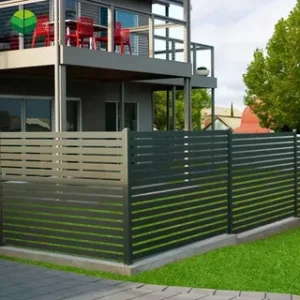
Aluminum fencing is commonly used around:
- Front yards
- Gardens
- Landscaping
- Driveways
- Pool areas where appropriate safety requirements are met
- Decorative boundaries
- Larger residential properties
Its major advantage is that it can provide an attractive metal appearance with relatively low routine maintenance.
Aluminum also does not have the same rot concerns as untreated wood.
However, aluminum is generally not the first choice when complete privacy is the main objective.
An aluminum picket-style fence usually allows visibility through the fence.
Therefore, the best type of fence in Walnut Grove, WA for a homeowner seeking privacy may be different from the best option for a homeowner who wants an open decorative boundary.
When should a homeowner choose aluminum?
Aluminum may make sense when the homeowner wants:
- A decorative appearance
- Open visibility
- Low maintenance
- A defined property boundary
- A clean architectural style
- A fence that complements landscaping
For front-yard applications, visibility can sometimes be more desirable than a tall privacy screen.
Is chain-link fencing a poor choice for home value?
No. Chain-link fencing is not automatically a poor choice simply because it is more functional than decorative.
Its value comes from solving practical problems efficiently.
Chain-link can be useful for:
- Pet containment
- Utility areas
- Side yards
- Backyards
- Garden areas
- Security boundaries
- Larger properties
- Functional enclosures
It is also available with privacy additions such as slats or screening materials.
The main limitation is appearance.
If the homeowner’s priority is premium curb appeal, a decorative wood or metal fence may integrate more naturally with the property’s design.
If the priority is simply creating a durable boundary for a dog, garden, or utility space, chain link may be a sensible solution.
This is an important reminder that home value is not only about material price.
A fence that perfectly solves a homeowner’s problem can provide more practical value than a more expensive fence that does not fit the property.
Which fence material requires the least maintenance?
Vinyl and aluminum generally require less routine maintenance than wood, while chain link is also relatively simple to maintain.
Maintenance can include:
- Cleaning
- Inspecting posts
- Checking gates
- Tightening hardware
- Removing vegetation
- Treating or staining wood
- Addressing rust or corrosion where applicable
- Replacing damaged components
Wood typically requires more ongoing care because the material is vulnerable to moisture and biological deterioration.
The U.S. Forest Service recommends protective measures such as appropriate pressure treatment, water-repellent preservatives, and suitable decay-resistant materials for wood fencing.
That does not mean wood is a poor choice.
It means homeowners should include future maintenance when comparing the total value of different fencing options.
How does fence maintenance affect a home’s value?
Fence maintenance affects value mainly through appearance, function, and the condition of the property.
A damaged fence can create visible signs of deferred maintenance.
Potential buyers may notice:
- Leaning posts
- Broken boards
- Sagging gates
- Peeling finishes
- Rot
- Rust
- Missing panels
- Overgrown vegetation
- Loose hardware
- Uneven fence lines
These issues can make a property appear less cared for.
By contrast, a clean and functional fence can help the yard look organized.
What should homeowners inspect each year?
A simple fence inspection can include:
- Walk the entire fence line.
- Look for leaning posts.
- Check whether gates open and close properly.
- Inspect wood for soft areas or visible decay.
- Check metal components for corrosion.
- Look for broken fasteners.
- Trim plants touching the fence.
- Check areas where water collects.
- Look for damaged panels.
- Repair small problems before they become larger problems.
Regular inspection is especially useful for wood fencing because moisture-related deterioration can begin in areas that are easy to overlook.
How does fence design affect home value?
Fence design can influence how well the fence fits the architecture and landscape.
A fence should look like part of the property rather than an unrelated structure placed around it.
Important design elements include:
- Fence height
- Board spacing
- Color
- Material
- Post design
- Gate style
- Fence orientation
- Landscape integration
- Visibility
- Relationship to the home’s exterior
For example, a tall solid fence may provide excellent privacy but could visually dominate a small front yard.
A lower decorative fence may provide less privacy but better complement landscaping.
The best type of fence in Walnut Grove, WA is therefore often the fence that provides the needed function without creating unnecessary visual weight.
Does fence height matter?
Yes. Height affects privacy, security, appearance, cost, and local requirements.
Before selecting a height, homeowners should check applicable city or county regulations.
For example, the City of Vancouver, WA, states that a fence 6 feet or less in height outside an environmentally sensitive area generally does not require a permit, although other rules may apply. The city also states that fences must comply with applicable building and zoning codes.
Clark County provides different information for properties under its jurisdiction, stating that fences 7 feet or less generally do not need a permit, while taller fences and retaining walls require a permit and may need additional setbacks.
Because Walnut Grove properties may fall under different jurisdictions or regulatory conditions, homeowners should verify the rules that apply to their specific property before construction.
What should homeowners know about fence property lines in Washington?
Homeowners should confirm the property boundary before installing a fence near a lot line.
This is important because a fence can create a long-term property issue if it is installed in the wrong location.
Washington law includes provisions concerning partition fences between adjoining properties. RCW 16.60 addresses subjects including partition-fence construction, reimbursement, maintenance, and related responsibilities.
Washington law also provides procedures for situations where property boundaries are disputed or cannot be identified from existing records and markers.
What should you do before installing a boundary fence?
A homeowner should:
- Review available property documents.
- Identify the approximate boundary.
- Check existing survey information.
- Discuss the fence with an adjoining owner when appropriate.
- Confirm local setback and height requirements.
- Determine whether utility locations need to be identified.
- Confirm gate locations.
- Establish exactly where the fence will be installed.
If the boundary is uncertain or disputed, professional surveying or legal guidance may be appropriate.
A fence should not be used as a substitute for a legally established property boundary.
How does professional fence installation affect long-term value?
Professional installation can affect the fence’s appearance, stability, functionality, and lifespan.
The material alone does not determine the quality of a fence.
Installation details include:
- Accurate layout
- Proper post placement
- Correct post depth
- Appropriate spacing
- Level or stepped construction
- Gate alignment
- Hardware selection
- Drainage awareness
- Property-line consideration
- Terrain management
A high-quality fence can look poor if the posts are uneven or the gates sag.
This is why Fence Installation Services should be evaluated based on the complete installation process rather than only the price per linear foot.
Pro Construct LLC describes its fencing approach as site-specific, considering factors such as boundaries, grade changes, post locations, utilities, drainage, gates, and how the fence connects to other exterior features.
That type of planning is important because every property has different conditions.
What makes a fence installation look professional?
A professional-looking fence usually has consistent alignment, secure posts, properly fitted gates, clean transitions, and a design that matches the property.
Homeowners should look for:
- Straight fence runs
- Consistent post spacing
- Secure posts
- Even board or panel alignment
- Proper gate clearance
- Strong hinges and latches
- Clean corners
- Appropriate transitions
- Correctly finished ends
- Neat connections to existing structures
For sloped properties, the installation method also matters.
A fence may be:
- Stepped
- Raked
- Custom-fitted
- Designed with adjusted panel heights
The correct method depends on the material and property.
A professional installer should explain how the design will follow the terrain before construction begins.
What type of fence is best for privacy?
Solid wood and vinyl privacy fences are generally the most straightforward choices when privacy is the primary objective.
Privacy can be useful when a backyard:
- Faces a nearby home
- Is close to a street
- Has an outdoor seating area
- Contains a pool or recreational space
- Is used by children
- Contains pets
- Has a patio or deck
A privacy fence can make an outdoor space feel more enclosed and comfortable.
However, homeowners should consider the effect on light, airflow, views, and appearance.
Is a tall privacy fence always better?
No. A taller fence is not automatically better.
The appropriate height depends on:
- Local rules
- Yard size
- Privacy needs
- Neighbor relationships
- Landscape design
- Street visibility
- Home architecture
- Safety requirements
A smaller property can sometimes feel crowded by an unnecessarily tall fence.
A well-designed privacy fence should provide the desired screening while still looking appropriate for the property.
What type of fence is best for gardens?
The best type of fence in Walnut Grove, WA for a garden depends on whether the homeowner needs decoration, animal protection, privacy, or a combination of these purposes.
Garden fencing can be:
- Low wood fencing
- Decorative metal
- Picket fencing
- Wire fencing
- Mesh fencing
- Vinyl fencing
- Combination fencing
A garden fence does not usually need to provide the same privacy as a backyard boundary.
Instead, its main goals may be:
- Protecting plants
- Defining planting areas
- Keeping pets out
- Separating pathways
- Creating visual structure
Homeowners looking for garden fencing services in Walnut Grove, WA should explain what the fence needs to accomplish before choosing the material.
How should homeowners choose garden fencing services in Walnut Grove, WA?
Homeowners should choose garden fencing based on the garden’s purpose, dimensions, plant layout, animals, access requirements, and appearance.
A useful planning process is:
- Measure the garden.
- Identify entry points.
- Determine whether pets need to be contained.
- Identify vulnerable plants.
- Choose the required fence height.
- Select a material.
- Consider gates.
- Plan maintenance access.
- Check local rules.
- Confirm the final layout before installation.
For small gardens, a low decorative fence may be enough.
For gardens vulnerable to pets or wildlife, a stronger enclosure may be necessary.
The right solution is the one that protects the garden without making daily maintenance difficult.
Can a fence improve security?
Yes, a fence can create a physical boundary and control access, although no residential fence guarantees security.
A fence may help:
- Define private areas
- Guide people toward specific entrances
- Restrict pet movement
- Reduce accidental access
- Separate equipment
- Create controlled gates
Security requirements differ greatly by property.
For some homeowners, visibility is useful because they want to see the yard and surrounding area.
For others, privacy is more important.
This is another reason why the best type of fence in Walnut Grove, WA should be selected based on the homeowner’s actual objective.
What type of fence is best for pets?
The best pet fence depends on the animal, its size, behavior, and the property.
Important considerations include:
- Fence height
- Gap size
- Gate security
- Digging behavior
- Jumping ability
- Climbing ability
- Material strength
- Ground clearance
A small dog may require a different solution from a large or highly active dog.
Homeowners should also consider whether gates need self-closing or self-latching hardware.
A fence that looks attractive but has large gaps under the panels may not work well for a small dog.
Similarly, a low decorative fence may not contain an active dog.
How can a fence increase outdoor living space?
A fence can make an outdoor area feel more defined and usable.
It can help create separate zones such as:
- Dining areas
- Seating areas
- Play spaces
- Garden areas
- Pet areas
- Outdoor kitchens
- Pool areas
- Storage areas
The fence itself does not create additional square footage, but it can make existing outdoor space easier to organize.
For example, a backyard with no clear separation may feel exposed or unfinished.
Adding a thoughtfully designed fence can define the edges of the space and help homeowners understand how the yard can be used.
This functional improvement may contribute to buyer appeal even when there is no guaranteed dollar-for-dollar resale return.
What fence features should homeowners consider besides the material?
Homeowners should consider gates, posts, hardware, height, layout, and finish in addition to the primary fence material.
A fence project includes more than panels or boards.
Important components include:
Posts
Posts provide the structural support for the fence.
Rails
Rails connect posts and support fence boards or panels in many designs.
Panels or boards
These create the visible fence surface.
Gates
Gates provide access and may require stronger posts and hardware.
Hinges and latches
These control gate movement and security.
Caps and trim
These can improve appearance and protect certain components.
Concrete or other post-setting methods
These can affect stability depending on site conditions and installation design.
A homeowner comparing fencing quotes should therefore compare the complete scope of work rather than comparing only the visible material.
How much does fence installation cost?
Fence installation cost varies widely and should be calculated from the actual project rather than a generic online number.
Important cost factors include:
- Linear footage
- Material
- Fence height
- Fence style
- Number of gates
- Terrain
- Removal of an existing fence
- Post requirements
- Access to the property
- Site preparation
- Landscaping
- Drainage
- Hardware
- Labor
- Local requirements
For example, 100 linear feet of a simple fence on a flat site is not necessarily comparable to 100 linear feet of a taller privacy fence installed on a sloped property with multiple gates.
Why should homeowners get a project-specific estimate?
A project-specific estimate can account for actual conditions.
Homeowners should ask whether the estimate includes:
- Materials
- Labor
- Old fence removal
- Disposal
- Gates
- Posts
- Hardware
- Site preparation
- Permits or permit-related services where applicable
- Cleanup
This helps prevent an artificially low initial price from becoming a more expensive project later.
Does an expensive fence automatically add more value?
No. A more expensive fence does not automatically create more resale value.
This is one of the most important points for homeowners.
Imagine two properties:
Property A has a premium fence that does not match the home, requires specialized maintenance, and blocks a desirable view.
Property B has a moderately priced fence that provides privacy, matches the architecture, has a well-designed gate, and is professionally installed.
The second fence may provide greater practical appeal even though it costs less.
NAR specifically notes that cost recovery for outdoor projects depends on project design, quality of materials, location, home age and condition, and homeowner preferences.
Therefore, homeowners should think in terms of fit and usefulness, not simply purchase price.
What is the original fence value comparison for Walnut Grove homeowners?
The following decision matrix provides an original planning framework for comparing common fence types.
The scores below are not resale-value measurements, appraisal data, or a survey of Walnut Grove buyers. They are a practical comparison based on common characteristics such as privacy, maintenance, appearance, flexibility, and typical residential use.
| Factor | Wood | Vinyl | Aluminum | Chain Link |
| Privacy potential | 5/5 | 5/5 | 2/5 | 1/5 |
| Design flexibility | 5/5 | 4/5 | 4/5 | 3/5 |
| Low-maintenance potential | 3/5 | 5/5 | 5/5 | 4/5 |
| Natural appearance | 5/5 | 3/5 | 3/5 | 2/5 |
| Decorative appearance | 4/5 | 4/5 | 5/5 | 2/5 |
| Pet containment potential | 5/5 | 5/5 | 4/5 | 5/5 |
| Garden applications | 5/5 | 4/5 | 5/5 | 5/5 |
| Repair flexibility | 5/5 | 3/5 | 4/5 | 4/5 |
| Privacy-focused residential use | 5/5 | 5/5 | 2/5 | 1/5 |
How should homeowners use this table?
Use the table to identify priorities rather than choosing the material with the most numbers.
For example:
- Privacy priority: Compare wood and vinyl.
- Low maintenance: Consider vinyl or aluminum.
- Natural appearance: Consider wood.
- Decorative front boundary: Consider aluminum or decorative wood.
- Pet containment: Compare chain link, wood, and vinyl.
- Garden enclosure: Consider wood, aluminum, or mesh/chain-link solutions.
- Modern appearance: Consider horizontal wood or selected metal designs.
This approach is more useful than declaring one material the winner for every property.
What fence style works well with a modern home?
Horizontal wood fencing is often chosen for modern-looking properties because its horizontal lines can complement contemporary architecture.
Modern fence designs may include:
- Horizontal wood boards
- Simple vertical slats
- Minimalist metal fencing
- Wood-and-metal combinations
- Dark decorative fencing
- Clean-lined vinyl designs
The important point is proportion.
A fence should relate to:
- Window lines
- Exterior colors
- Roof design
- Landscaping
- Walkways
- Driveway
- Outdoor living areas
A fence that copies the architectural language of the house can look more intentional.

What fence style works well with a traditional home?
Traditional homes may pair well with:
- Picket fencing
- Privacy wood fencing
- Post-and-rail designs
- Decorative metal
- Classic vertical board fencing
The exact choice depends on the home’s architecture and landscape.
A traditional property may benefit from a fence with familiar proportions and simple details.
A highly modern fence can sometimes look disconnected from an older home.
The goal should be visual harmony rather than following a trend simply because it is popular online.
How can homeowners choose the best type of fence in Walnut Grove, WA?
Homeowners can choose the best type of fence in Walnut Grove, WA by following a simple five-step process.
Step 1: Define the purpose
Ask:
- Do I need privacy?
- Do I need pet containment?
- Do I need security?
- Do I need garden protection?
- Do I want decorative landscaping?
- Do I want to define a boundary?
Step 2: Set a maintenance preference
Ask:
- Am I willing to stain wood?
- Do I want minimal routine maintenance?
- Am I comfortable cleaning vinyl?
- Do I need a material that handles daily use?
Step 3: Match the home
Look at:
- Exterior color
- Architecture
- Landscaping
- Driveway
- Existing gates
- Outdoor structures
Step 4: Check local requirements
Verify:
- Fence height
- Permit requirements
- Setbacks
- Property lines
- Environmentally sensitive areas
- Utility access
Step 5: Compare complete installation estimates
Do not compare material price alone.
Compare:
- Materials
- Labor
- Posts
- Gates
- Hardware
- Removal
- Cleanup
- Site preparation
- Installation method
What are the most common fence mistakes homeowners make?
The most common mistakes are usually related to planning rather than choosing the “wrong” material.
Mistake 1: Choosing material before defining the purpose
A homeowner may choose a fence based on appearance without asking what the fence needs to do.
Mistake 2: Ignoring maintenance
A homeowner may like the appearance of wood but underestimate the future care required.
Mistake 3: Forgetting gates
A fence without a well-planned gate can become inconvenient.
Mistake 4: Ignoring property boundaries
Installing a fence before confirming the boundary can create serious problems.
Mistake 5: Choosing the wrong height
A fence that is too low may not provide enough privacy. A fence that is unnecessarily tall may create visual or regulatory problems.
Mistake 6: Using low-quality hardware
Gates are frequently used and need appropriate hinges, latches, and support.
Mistake 7: Ignoring drainage
Water exposure can contribute to problems, particularly with wood.
Mistake 8: Choosing a fence that does not match the house
A fence can look disconnected when its color, style, or scale conflicts with the property.
How can fencing repair near me help protect existing fence value?
Searching for fencing repair near me can make sense when the existing fence has limited damage and most of the structure remains useful.
Repair may be appropriate when:
- One or two boards are broken
- A gate needs adjustment
- Hardware is damaged
- A small section is leaning
- A post needs replacement
- A limited area has rot
- A panel has been damaged
Replacement may make more sense when:
- Many posts are failing
- Large sections are deteriorated
- The fence is badly leaning
- Repeated repairs are needed
- The design no longer meets the property’s needs
- The structure has reached the end of its useful life
The correct decision depends on the condition of the existing fence.
When should a fence be repaired instead of replaced?
A simple rule is to compare the condition of the entire system.
If most of the fence is sound and the problem is localized, repair may be practical.
If structural problems exist throughout the fence, replacement may provide a more reliable long-term solution.
A professional inspection can help identify which components actually need work.
What should homeowners look for when searching for fencing services near me?
Homeowners searching for fencing services near me should compare companies based on the complete project rather than choosing solely on the lowest quote.
Look for:
- Clear estimates
- Relevant installation experience
- Material options
- Detailed project scope
- Proper site planning
- Gate installation capability
- Property-line awareness
- Communication
- Cleanup
- Warranty information where offered
- References or examples of completed work
A professional fencing company should be able to explain why a particular material or design fits the project.
A quote should also clearly explain what is included.
What should commercial properties consider when choosing a fence?
Commercial Fencing Services in Walnut Grove, WA may require a different approach because commercial properties often have different security, access, traffic, durability, and operational requirements.
Commercial fencing may be used for:
- Business property boundaries
- Equipment areas
- Storage areas
- Parking areas
- Loading zones
- Utility equipment
- Restricted-access areas
- Industrial sites
- Landscaping
- Employee areas
The design should consider how people, vehicles, equipment, and deliveries move through the property.
How is commercial fencing different from residential fencing?
Commercial fencing may place greater emphasis on:
- Controlled access
- Durability
- Gate frequency
- Vehicle movement
- Security
- Visibility
- Property operations
- Maintenance access
A commercial fence should therefore be planned around how the business uses the site.
The right fence is not necessarily the tallest or strongest available. It should provide the required function without interfering with daily operations.
How can a fence improve a property’s overall outdoor design?
A fence can become part of the landscape design instead of functioning only as a boundary.
Homeowners can coordinate a fence with:
- Trees
- Shrubs
- Flower beds
- Patios
- Decks
- Walkways
- Outdoor lighting
- Driveways
- Garden beds
- Outdoor seating
For example, a low decorative fence can frame a garden.
A privacy fence can create a background for landscaping.
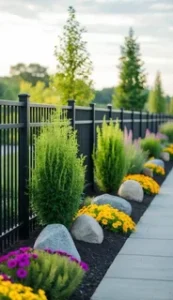
A metal fence can allow plants to remain visible.
A wood fence can provide a contrasting backdrop for greenery.
This approach can make the entire outdoor space feel more organized.
Does landscaping around a fence increase its appeal?
Landscaping can improve the visual relationship between a fence and the property.
Useful approaches include:
- Planting shrubs near appropriate fence sections
- Using climbing plants where suitable
- Keeping vegetation away from vulnerable fence components
- Creating planting beds along selected sections
- Adding lighting
- Maintaining grass and pathways
- Using consistent colors
However, plants should not be allowed to create unnecessary moisture or structural problems.
For wood fences in particular, homeowners should monitor vegetation that traps moisture against boards or prevents inspection.
What should Walnut Grove homeowners consider about local fence rules?
Homeowners should check the rules that apply to their specific property before installation because requirements can differ by jurisdiction.
The City of Vancouver states that fences 6 feet or less generally do not require a permit outside environmentally sensitive areas, while also noting that zoning, building codes, setbacks, and other requirements still apply.
Clark County’s published guidance states that fences 7 feet or less generally do not require a permit, while taller fences and retaining walls require a permit and may have additional requirements.
These examples show why homeowners should not assume that one rule applies to every property around the Vancouver-Walnut Grove area.
What should you verify before starting?
Verify:
- Which jurisdiction governs the property.
- Maximum permitted height.
- Required setbacks.
- Permit requirements.
- Environmental or critical-area restrictions.
- Property boundaries.
- Utility considerations.
- Homeowners association requirements, if applicable.
- Gate placement.
- Any special restrictions related to streets or visibility.
Local requirements can change, so current official guidance should be checked before construction.
How does fence quality affect long-term value?
Fence quality affects how well the fence performs and how it looks over time.
Quality includes:
- Appropriate material
- Correct installation
- Stable posts
- Good hardware
- Proper alignment
- Correct drainage
- Appropriate maintenance
- Suitable design
A fence is a system.
If the posts fail, attractive boards will not solve the problem.
If the gate is poorly supported, a premium fence may become inconvenient.
If water is trapped around vulnerable wood components, deterioration may accelerate.
This is why homeowners should evaluate the entire project.
What is the best type of fence in Walnut Grove, WA for low maintenance?
For homeowners who want minimal routine maintenance, vinyl and aluminum deserve close consideration.
Vinyl can be useful for privacy.
Aluminum can be useful for decorative boundaries.
Chain link can be useful for practical containment.
Wood can be useful when natural appearance and design flexibility are more important than minimizing maintenance.
The right choice depends on the homeowner’s priorities.
Which fence should a busy homeowner consider?
A busy homeowner may prefer a material that does not require regular staining or painting.
That can make vinyl or aluminum attractive.
However, even low-maintenance fencing should still be inspected periodically.
Low maintenance does not mean no maintenance.
What is the best type of fence in Walnut Grove, WA for privacy and curb appeal?
For homeowners who want both privacy and strong residential appearance, well-designed wood and vinyl privacy fencing are two options worth comparing.
Wood provides:
- Natural texture
- Strong customization
- Many design options
- A traditional appearance
Vinyl provides:
- Consistent appearance
- Low routine maintenance
- Strong privacy options
- Easy cleaning
The better option depends on the home.
A homeowner who values natural material and customization may prefer wood.
A homeowner who values low maintenance may prefer vinyl.
What is the best type of fence in Walnut Grove, WA for a garden?
For gardens, the best type of fence in Walnut Grove, WA depends on whether the goal is decoration, plant protection, pet control, or all three.
Good options can include:
- Low wood fencing
- Decorative aluminum
- Mesh fencing
- Picket fencing
- Wire fencing
- Vinyl
A garden enclosure should not make it difficult to water, prune, harvest, or maintain plants.
Gate placement is therefore just as important as material selection.
What is the best type of fence in Walnut Grove, WA for pets?
For pet owners, the best type of fence in Walnut Grove, WA depends on the animal’s behavior and size.
Consider:
- Jumping
- Digging
- Climbing
- Squeezing through gaps
- Gate behavior
- Fence height
- Ground clearance
Wood and vinyl can provide solid barriers.
Chain link can provide practical containment.
Decorative open fencing may be less suitable for small animals or pets that can pass through large gaps.
The goal should be safe and reliable containment rather than simply choosing the most attractive fence.
What is the best type of fence in Walnut Grove, WA for curb appeal?
For curb appeal, the best type of fence in Walnut Grove, WA is the one that complements the home’s architecture, landscaping, and surrounding properties.
Front-yard fences should receive special attention because they are highly visible.
Potential choices include:
- Decorative aluminum
- Picket wood
- Low vinyl
- Decorative wood
- Metal-and-wood combinations
A front fence should not overwhelm the house.
In many cases, a lower fence with attractive landscaping can create a more open appearance than a tall privacy fence.
How can Pro Construct LLC help with fencing projects?
Pro Construct LLC provides home improvement and construction services in the Vancouver, Washington area, including fencing-related work. Its fencing information describes planning around property boundaries, grades, post locations, gates, drainage, utilities, and the intended use of the space.
For a homeowner, this type of planning matters because a fence is connected to the rest of the property.
A good project should begin with questions such as:
- What should the fence accomplish?
- How much privacy is needed?
- What material fits the home?
- Where should gates be located?
- What height is appropriate?
- What maintenance is acceptable?
- Where is the property line?
- Are permits required?
- How does the fence interact with landscaping?
- How will the fence follow the property’s grade?
The answers can then guide the material and design.
What should you ask before hiring a fence installer?
Before approving a project, homeowners should ask several practical questions.
Ask about materials
- What material is being proposed?
- What grade or quality is it?
- What maintenance does it require?
- What components are included?
Ask about installation
- How will the posts be installed?
- How will the fence follow the terrain?
- How will gates be supported?
- How will corners be handled?
Ask about property boundaries
- Where will the fence be located?
- Who is responsible for confirming the boundary?
- Is a survey needed?
Ask about regulations
- Does the project require a permit?
- Are there height restrictions?
- Are there setbacks?
- Are there special site conditions?
Ask about the estimate
- Is removal included?
- Is disposal included?
- Are gates included?
- Is cleanup included?
- Are materials and labor both included?
Clear answers can make the project easier to manage.
How can homeowners make a fence add practical value without overspending?
Homeowners can maximize practical value by spending money on the features that matter most to the property.
For example:
If privacy is the priority:
Invest in a properly designed privacy fence rather than decorative features that do not solve the privacy problem.
If appearance is the priority:
Focus on alignment, gate design, material quality, and landscaping integration.
If maintenance is the priority:
Compare low-maintenance materials before choosing wood.
If pets are the priority:
Spend attention on height, gaps, gates, and ground-level details.
If resale is the priority:
Choose a design that is attractive, functional, well maintained, and appropriate for the neighborhood rather than assuming the most expensive material will produce the greatest return.
This is a more balanced approach to the best type of fence in Walnut Grove, WA.
What fence upgrades can improve the finished appearance?
Several small details can make a major visual difference.
Consider:
- Matching gate hardware
- Decorative post caps
- Consistent fence color
- Clean corners
- Properly aligned gates
- Landscape planting
- Outdoor lighting
- Well-maintained pathways
- Coordinated exterior colors
However, homeowners should avoid adding decorative elements simply because they are expensive.
Every upgrade should support the home’s overall design.
What is the final answer to which fence adds the most value?
The answer depends on what “value” means for the homeowner.
If value means privacy, wood and vinyl privacy fences are strong candidates.
If value means low maintenance, vinyl and aluminum can be attractive.
If value means natural appearance and customization, wood is difficult to ignore.
If value means practical containment, chain link can be highly functional.
If value means decorative curb appeal, aluminum, wood, or carefully selected combination designs can work well.
If value means resale appeal, the strongest choice is generally the fence that is appropriate for the property, professionally installed, visually compatible with the home, useful to buyers, and easy enough to maintain.
There is no credible basis for saying that one fence material automatically adds the most resale dollars to every home.
The NAR’s research supports this broader approach because outdoor-project cost recovery varies with project design, quality, location, property condition, and homeowner preferences.
For homeowners in Walnut Grove, the most useful strategy is therefore to choose a fence around the property’s needs first and the material second.
What is the best type of fence in Walnut Grove, WA for your specific property?
The best type of fence in Walnut Grove, WA is the one that provides the right balance of purpose, appearance, durability, maintenance, and cost for the property.
A practical decision can be made by answering these questions:
- Why do I need the fence?
- How much privacy do I need?
- Will children or pets use the yard?
- How much maintenance am I willing to perform?
- Does the fence match the home?
- What height is appropriate?
- What local requirements apply?
- Where is the property boundary?
- How many gates are needed?
- What installation method will be used?
- What will the total project cost include?
- How will the fence look after several years of use?
These questions turn a vague material comparison into a useful project plan.
Frequently Asked Questions
What type of fence adds the most value to a home?
There is no single fence material that guarantees the highest resale value. Wood, vinyl, aluminum, and other materials can add appeal when they match the property, meet a real need, are properly installed, and remain well maintained.
Is wood or vinyl fencing better for privacy?
Both can provide strong privacy. Wood offers more natural texture and customization, while vinyl generally requires less routine maintenance. The better choice depends on appearance, maintenance preferences, budget, and property design.
Does a fence increase home resale value?
A fence can improve a property’s functionality and curb appeal, but it does not guarantee a specific increase in resale value. NAR research indicates that outdoor-project cost recovery varies according to design, quality, location, property condition, and homeowner preferences.
Do I need a permit for a fence in Walnut Grove, WA?
Permit requirements depend on the jurisdiction and property. The City of Vancouver states that fences 6 feet or less generally do not require a permit outside environmentally sensitive areas, while Clark County states that fences 7 feet or less generally do not require a permit. Homeowners should verify the rules governing their specific property before construction.
Conclusion
The question “What type of fence adds the most value to your home?” does not have one material-based answer. The best type of fence in Walnut Grove, WA depends on what the property needs and what homeowners value most.
Wood can provide natural beauty and customization. Vinyl can provide privacy with lower routine maintenance. Aluminum can provide a clean decorative boundary. Chain link can provide practical containment and security.
The strongest fence investment is usually one that combines appropriate design, quality materials, professional installation, useful functionality, manageable maintenance, and compliance with local requirements.
For homeowners considering Fence Installation Services, garden fencing services in Walnut Grove, WA, or fencing repair near me, careful planning is the first step. Commercial property owners can also evaluate Commercial Fencing Services in Walnut Grove, WA according to access, security, durability, and operational needs.
Pro Construct LLC can help homeowners evaluate fencing needs and plan a fence around the property, its layout, and its intended use. A thoughtful design can improve privacy, outdoor usability, appearance, and everyday function without assuming that the most expensive fence is automatically the most valuable.
If you are planning a fence project in Walnut Grove, WA, start by defining what you need the fence to accomplish, then compare materials and installation options based on those priorities.